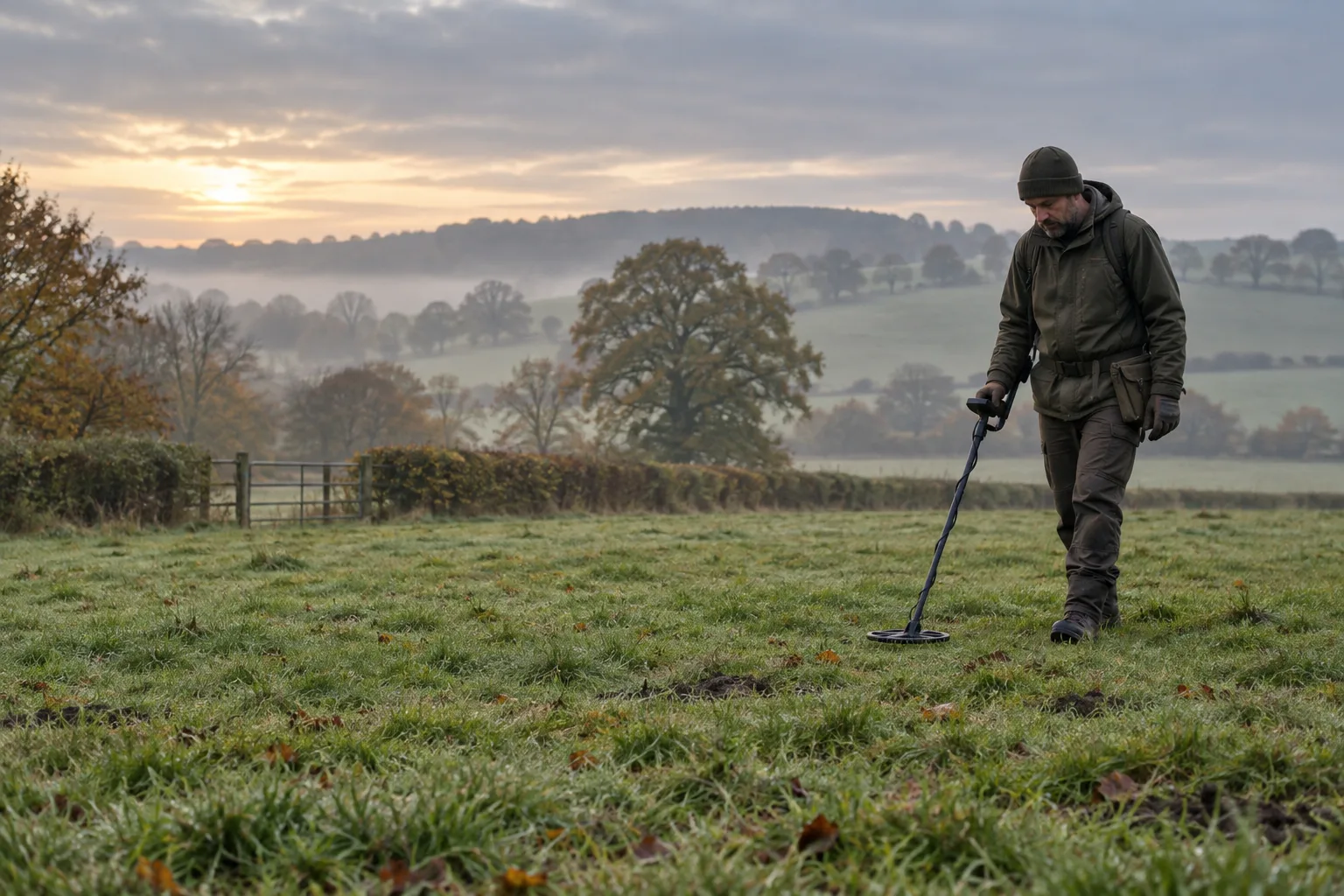
What changes this decision in the UK?
Technical fit, commercial package and legal authority are three separate checks. A detector specification helps select equipment; a written quote fixes the package; landowner permission and the relevant heritage or foreshore rules determine whether and how the site may be searched.
- Pasture can hide uneven ground and compacted plugs; agree the recovery method with the landowner.
- Cultivated soil changes moisture, target orientation and iron distribution, so retest rather than copy one setting.
- Do not enter scheduled monuments or protected areas simply because the surrounding field is permitted.
best metal detector for UK fields and pasture at a glance
| Site condition | Useful priority | What to test |
|---|---|---|
| Short damp pasture | Stable ground response and manageable coil | Two-direction repeatability at normal sweep height |
| Dense iron or old habitation scatter | Separation and controlled recovery | Coin beside nails with several recovery settings |
| Open ploughsoil or stubble | Coverage, balance and robust coil control | Fatigue and signal consistency over a measured lane |
| Field edge near services or fencing | Interference control and site discipline | Noise check before raising sensitivity |
Translate “field” into a specific ground brief
A UK field can mean clean permanent pasture, deeply cultivated soil, wet clay, light sandy loam, stubble or a dense spread of modern and historic iron. Each creates a different workload. Note ground moisture, vegetation, slope, iron density, electrical interference and time available before comparing devices.
Depth claims without a target and soil description are not useful. A small hammered coin, a large copper object and modern aluminium behave differently, while target orientation can change after ploughing. Describe the main target class and the conditions in which it must be separated from unwanted metal.
Match coil behaviour to coverage and separation
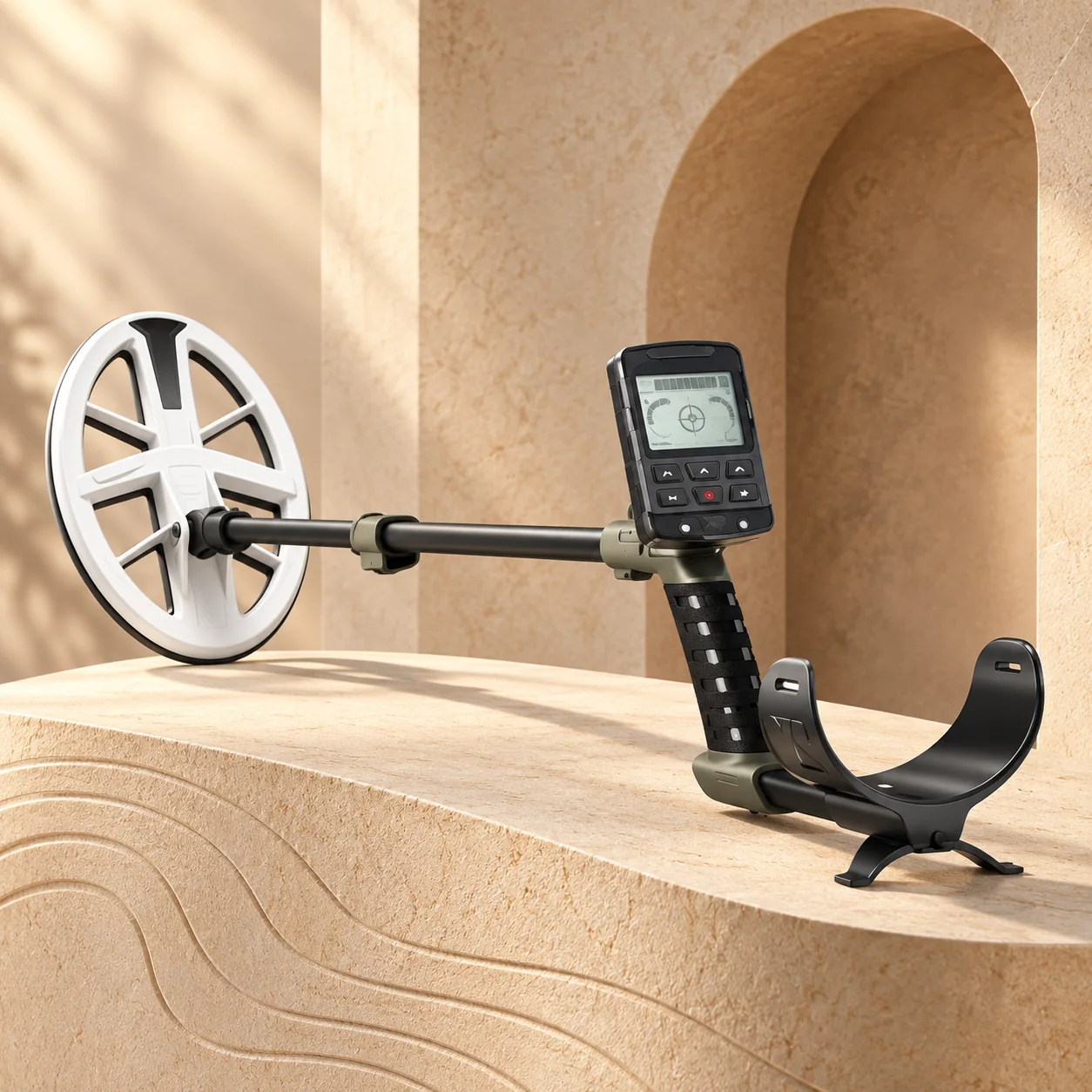
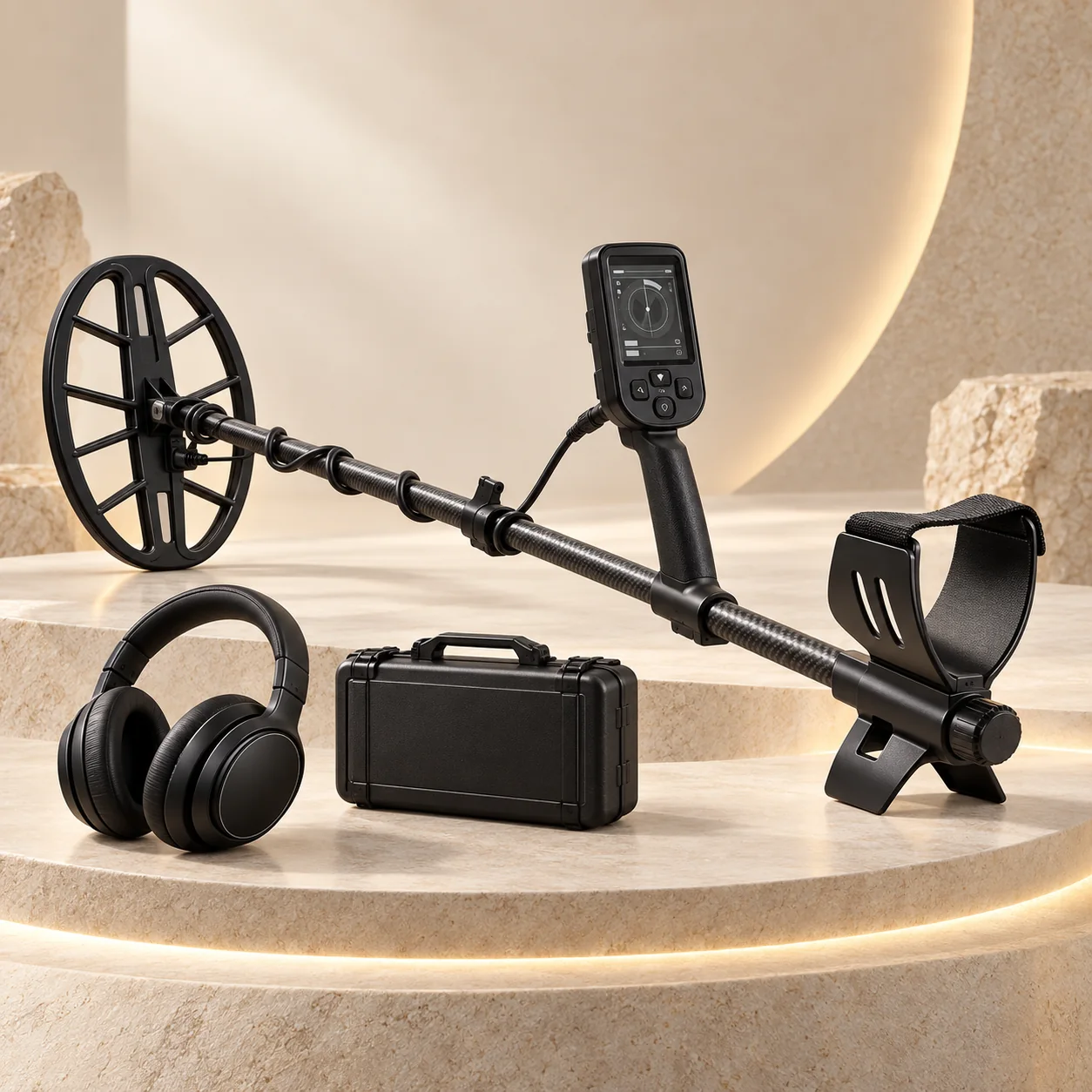
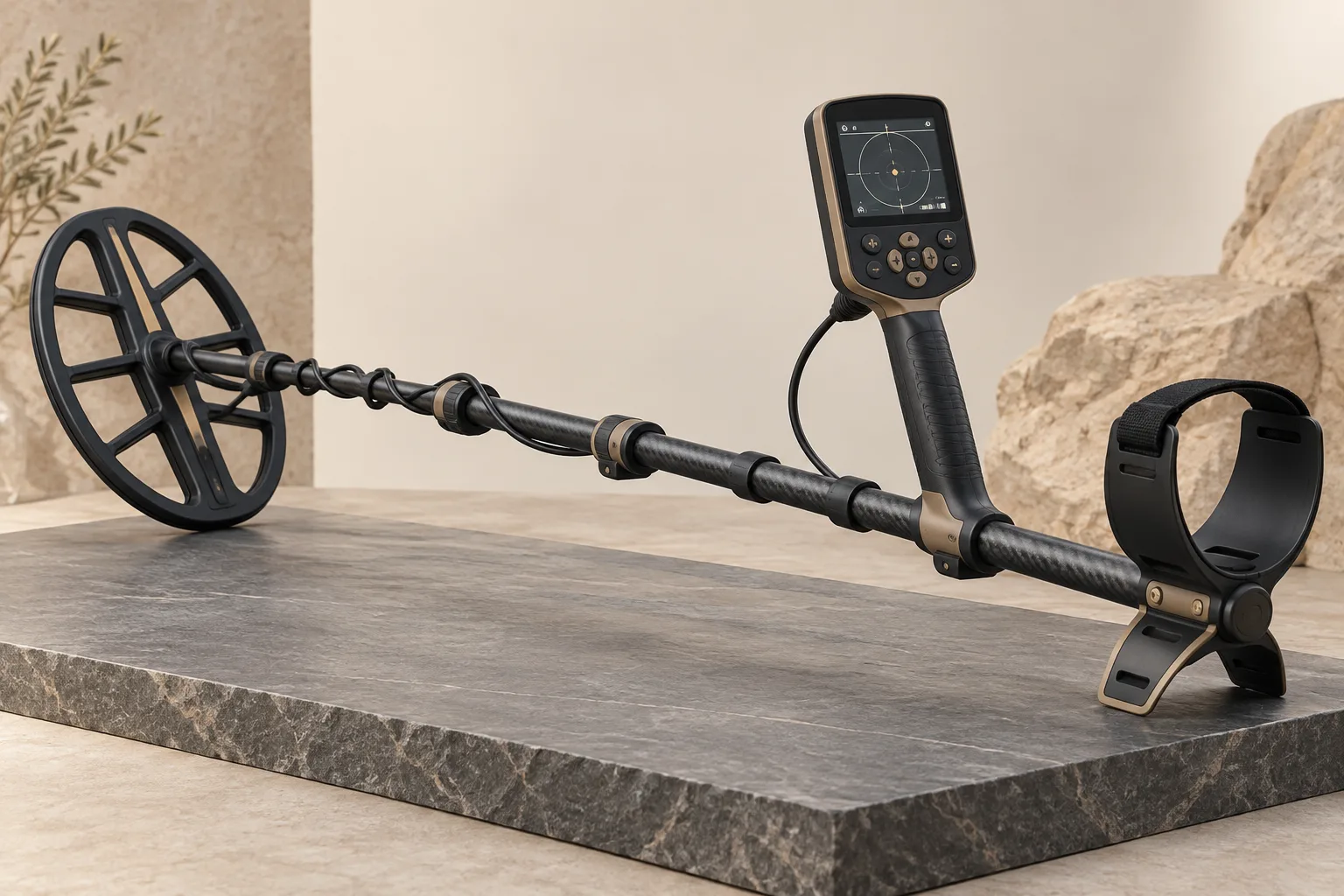
A larger coil may cover open ground efficiently, but can feel nose-heavy or combine adjacent responses in dense iron. A smaller coil can improve control around stubble and contamination, yet increases passes over a large field. Compare the coil you will receive, not every accessory the platform could theoretically accept.
Measure a short lane and sweep it with the same overlap at a realistic pace. Repeat with known targets near common iron. This exposes balance, audio clarity and fatigue more reliably than waving a detector over a clean isolated coin. Ask for second-coil compatibility and price separately.
Control iron, moisture and sensitivity before chasing depth
High sensitivity is not automatically a better field setting. Unstable noise, clipped sweeps and false responses waste time and can hide useful repeatability. Start from a suitable field profile, complete the recommended noise and ground procedure, then change one control while keeping coil height and speed constant.
On dense iron, recovery behaviour and audio choices may matter more than maximum air-test distance. On quieter open ground, coverage and fatigue may dominate. Log mode, ground procedure, sensitivity, recovery and coil so the next visit begins from evidence rather than memory.
Keep field permission and archaeology checks separate
A landowner can authorise access, but that does not cancel statutory protection. Scheduled monuments require separate consent, and potentially important finds should enter the correct reporting route. Ask about known archaeology and verify official mapping or advice before detecting.
Agree how ordinary finds, potentially valuable finds and rubbish will be handled. A clear arrangement protects the relationship that makes repeated field testing possible and helps preserve location and context when something requires professional identification.
Manufacturer and official authority sources
Checked 2026-09-15. Reopen the current source before relying on a specification, package detail or legal route.
Questions about best metal detector for UK fields and pasture
Is a large coil always best for open fields?
No. It may improve coverage, but balance, iron density, stubble and target separation can make a smaller coil more productive.
Which setting gives maximum pasture depth?
There is no universal setting. Use a stable profile, follow the detector’s ground procedure and test known targets under actual conditions.
Does landowner permission cover a scheduled monument?
No. Protected sites can require separate statutory consent and should be checked independently.